How Seasonal Behavior Impacts QSR Demand

Seasonal changes have a direct impact on how, when, and where consumers eat. From summer road trips and school schedules to colder weather and holiday celebrations, changes in daily routines influence restaurant visits, menu preferences, and ordering habits.
For quick service restaurants (QSRs), these shifts create both opportunities and challenges. A campaign that performs well during summer travel may lose relevance when families return to school. A restaurant near a business district may see weekday lunch traffic change throughout the year, while a location in a tourist destination experiences an entirely different demand cycle.
Understanding these patterns helps QSR brands anticipate changes in demand, reach consumers when they're most likely to visit, and make better decisions about where to invest advertising dollars.
In this white paper, we'll explore the seasonal factors that influence QSR demand, how purchasing behavior changes throughout the year, and what restaurant brands can do to build more responsive media strategies.
Why QSR Demand Changes Throughout the Year
QSR purchases are often driven by convenience, habit, and immediate needs. Consumers stop for breakfast during their commute, pick up lunch between meetings, or order dinner when family schedules make cooking difficult.
As those routines change throughout the year, so does restaurant demand. Some changes, like holidays and school calendars, are predictable. Other changes, such as severe weather or unexpected local events, can affect restaurant visits with little warning.
These factors influence more than overall sales. They can change which locations receive traffic, what time customers order, and whether they choose dine-in, drive-thru, pickup, or delivery.
Seasonal patterns also differ by restaurant type and market. Beverage-focused brands may benefit from warmer weather, while restaurants near schools or office buildings may depend more heavily on established weekday routines.
For QSR brands, understanding what's driving these changes is essential. A decline in restaurant visits may reflect a normal seasonal shift rather than a problem with advertising. Likewise, a strong sales month may be influenced by favorable conditions that would have increased demand regardless of how much was spent on media.
Weather and Temperature
Weather influences what consumers want to eat, how they travel, and whether they leave home to purchase a meal. Warm temperatures can create more opportunities for cold beverages, frozen desserts, and convenient meals during outdoor activities. Cold weather may increase interest in hot meals and ordering options that allow consumers to avoid leaving home.
Severe weather can create more immediate changes. Heavy rain, snow, or extreme heat may reduce visits to certain locations while increasing interest in delivery or drive-thru options. These conditions can also disrupt delivery operations or limit restaurant access.
The effects depend heavily on geography. A warm winter day may encourage restaurant visits in one market, while the same temperature would be considered unusually cold in another. Regional climate patterns should be part of seasonal demand planning.
School Calendars and Family Routines
The school year creates predictable schedules that influence QSR purchases. Morning commutes, school pickups, extracurricular activities, and busy evenings make quick meals an appealing option for families. These routines create opportunities for breakfast purchases, after-school snacks, and convenient dinner options.
During summer and holiday breaks, patterns change. Families may travel more frequently, eat at different times, or spend more time together outside the home. Demand can shift away from established weekday routines toward group meals, snacks, and purchases made during recreational activities.
These changes can also influence how brands communicate value. Family bundles, easy ordering, and convenience may appeal to consumers managing busy school schedules, while summer messaging may focus more on portability and flexibility.
Travel, Tourism, and Seasonal Mobility
Travel creates some of the most noticeable differences in QSR demand across locations. During summer vacations, long weekends, and holiday travel periods, consumers spend more time away from their regular neighborhoods. Restaurants near highways, airports, tourist attractions, and entertainment destinations may see increased traffic, while locations in residential or business areas experience different patterns.
Travel also changes how consumers choose restaurants. Familiar brands, convenient locations, speed of service, and easy access can become especially important when people are eating away from home. Mobile search, navigation platforms, and location-based advertising helps QSR brands reach these consumers during travel-related purchase decisions.
For brands operating across multiple markets, understanding seasonal population movement can help determine where advertising investment has the greatest opportunity to influence visits.
Holidays, Cultural Events, and Local Activities
Holidays and major events can temporarily change when and why consumers purchase QSR meals. Football games, graduation celebrations, festivals, holiday shopping, and community events can create demand for convenient meals, group orders, and snacks purchased before or after an activity.
These opportunities are often concentrated within specific locations and time periods. A restaurant near a stadium may experience increased demand around game times, while nearby locations outside the event area see little change.
Event-driven advertising works best when it reflects the occasion and the consumer's immediate needs. Messaging around convenience, group dining, or quick service may be more relevant than a broad seasonal promotion.
Changes in Work Schedules and Daily Routines
Work schedules are another important influence on QSR traffic, particularly for breakfast and lunch. Office attendance, commuting patterns, seasonal employment, and vacation schedules affect where consumers spend their weekdays and when they purchase meals.
A location near a business district may depend heavily on weekday lunch visits, while restaurants in residential neighborhoods may benefit when more people work from home. These differences can become more noticeable during summer vacations, major holidays, or periods when businesses adjust their operating schedules.
Understanding how consumers move between home, work, and other activities allows QSR brands to align advertising with the routines that support individual restaurant locations.
How Seasonal Behavior Changes QSR Purchase Occasions
Seasonal behavior influences both how frequently people visit QSRs and the types of meals they buy. A consumer who regularly stops for breakfast on the way to work may change that habit during vacation. Families who typically purchase dinner after school activities may shift to afternoon meals or snacks during summer break.
These changes create opportunities to adjust advertising around specific meal occasions rather than relying on the same message throughout the year.
| Purchase Occasion | Potential Seasonal Influence | Marketing Opportunity |
| Breakfast | School and commuting schedules | Adjust morning messaging and advertising schedules |
| Lunch | Workplace attendance and summer activities | Tailor campaigns to local routines |
| Afternoon Snacks | Warm weather and outdoor activities | Highlight beverages, snacks, and convenience |
| Dinner | Family schedules and seasonal activities | Promote family meals and easy dinner options |
| Late-Night Dining | Sporting events, travel, and entertainment | Align advertising with local demand periods |
| Delivery and Pickup | Weather and changes in daily routines | Emphasize convenience and ordering options |
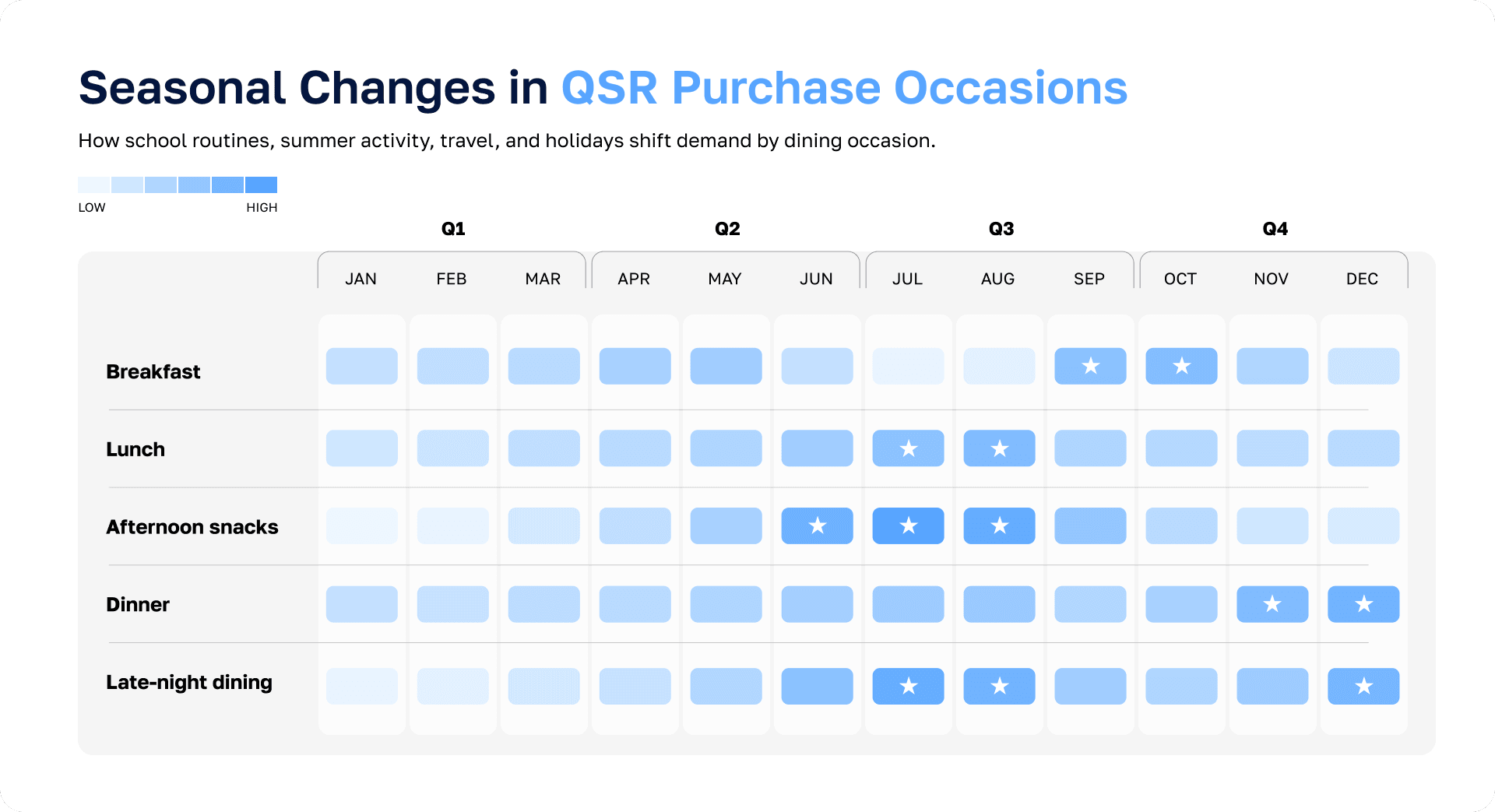
These patterns also demonstrate why seasonal campaigns should account for time of day, location, and purchase motivation. A national message may establish a consistent brand identity, but the timing and placement of advertising should reflect when consumers are most likely to act.
Why QSR Seasonality Varies Across Local Markets
National trends can help guide seasonal planning, but they rarely tell the complete story. Local climate, population density, commuting patterns, tourism, and community activities all influence restaurant demand. Even locations within the same metropolitan area may experience different seasonal patterns.
Consider the following examples:
- Suburban markets may experience changes tied closely to school schedules, family activities, and neighborhood routines. Breakfast and dinner demand can shift when school is out or extracurricular schedules change.
- Tourism markets may depend more heavily on seasonal visitors. Restaurants near attractions, hotels, and major travel routes can experience increased traffic during vacation periods, while demand declines after visitors leave.
- Urban business districts may see demand influenced by office attendance, professional events, and holiday vacation schedules. Weekday breakfast and lunch traffic may change significantly when fewer employees commute to work.
These differences make localized media planning especially important. Rather than applying identical seasonal budgets across every market, QSR brands can use local demand patterns to determine where advertising should be concentrated, when campaigns should run, and which messages are most relevant.
A coordinated national strategy supported by local market insights lets brands maintain consistency while responding to the needs of individual restaurant locations.
How QSR Brands Should Adapt Their Media Strategies to Seasonal Demand
Understanding seasonal behavior is the starting point. QSR brands also need media strategies that reflect how consumer demand changes throughout the year.
Plan Media Investment Around Expected Demand
Historical restaurant sales, transaction data, consumer trends, and local market conditions can help identify seasonal opportunities before they occur. These insights allow brands to plan advertising around expected demand rather than distributing budgets evenly across the calendar.
For example, a restaurant in a summer tourism market may benefit from additional investment leading into peak travel periods. A suburban QSR may concentrate more advertising around the return to school and the reestablishment of family routines.
Increased spending during busy periods is not always the best decision. Advertising before demand rises may help build brand familiarity, while slower periods can provide opportunities to encourage additional visits. The best approach depends on the restaurant's business goals, competitive conditions, and the expected return from additional media investment.
Adjust Messaging to Seasonal Consumer Needs
Seasonal advertising should reflect what consumers need at different points in the year. During busy school periods, convenience and family meal options may be especially relevant. Summer travel can create opportunities for messaging focused on portability, quick service, and familiar menu choices. Weather also creates opportunities to highlight products that fit the season.
But seasonal relevance doesn't always require a discount. Messages that emphasize convenience, taste, quality, and value can give consumers a reason to choose a restaurant without relying on frequent promotions.
Use Local Targeting and Daypart Strategies
Seasonal media plans should account for where consumers are and when they are most likely to purchase. Paid search and location-based advertising can reach consumers actively looking for nearby food options. Digital out-of-home can support visibility along commuting routes and near shopping or entertainment areas. Paid social and streaming audio can reinforce restaurant awareness during relevant daily activities.
Daypart targeting adds another level of precision. A breakfast campaign may be most effective during morning commuting hours, while family dinner messaging may perform better in the afternoon as consumers begin planning their evening.
The right channel mix and schedule should be based on local behavior and campaign objectives rather than a fixed approach applied across every season.
Balance Brand Awareness with Immediate Demand
Seasonal campaigns often focus heavily on generating restaurant visits during periods of strong purchase intent. That approach can support short-term sales, but maintaining brand familiarity throughout the year is just as important.
Consumers may choose a familiar QSR brand during travel, while running errands, or when regular routines change. Advertising that reinforces taste, convenience, reliability, and brand preference can influence those decisions even when it doesn't generate an immediate transaction.
An integrated strategy allows brand-building campaigns to maintain visibility while performance-focused media responds to seasonal purchase opportunities. This balance supports both immediate restaurant traffic and repeat visits over time.
Measuring the Impact of Seasonality on QSR Advertising Performance
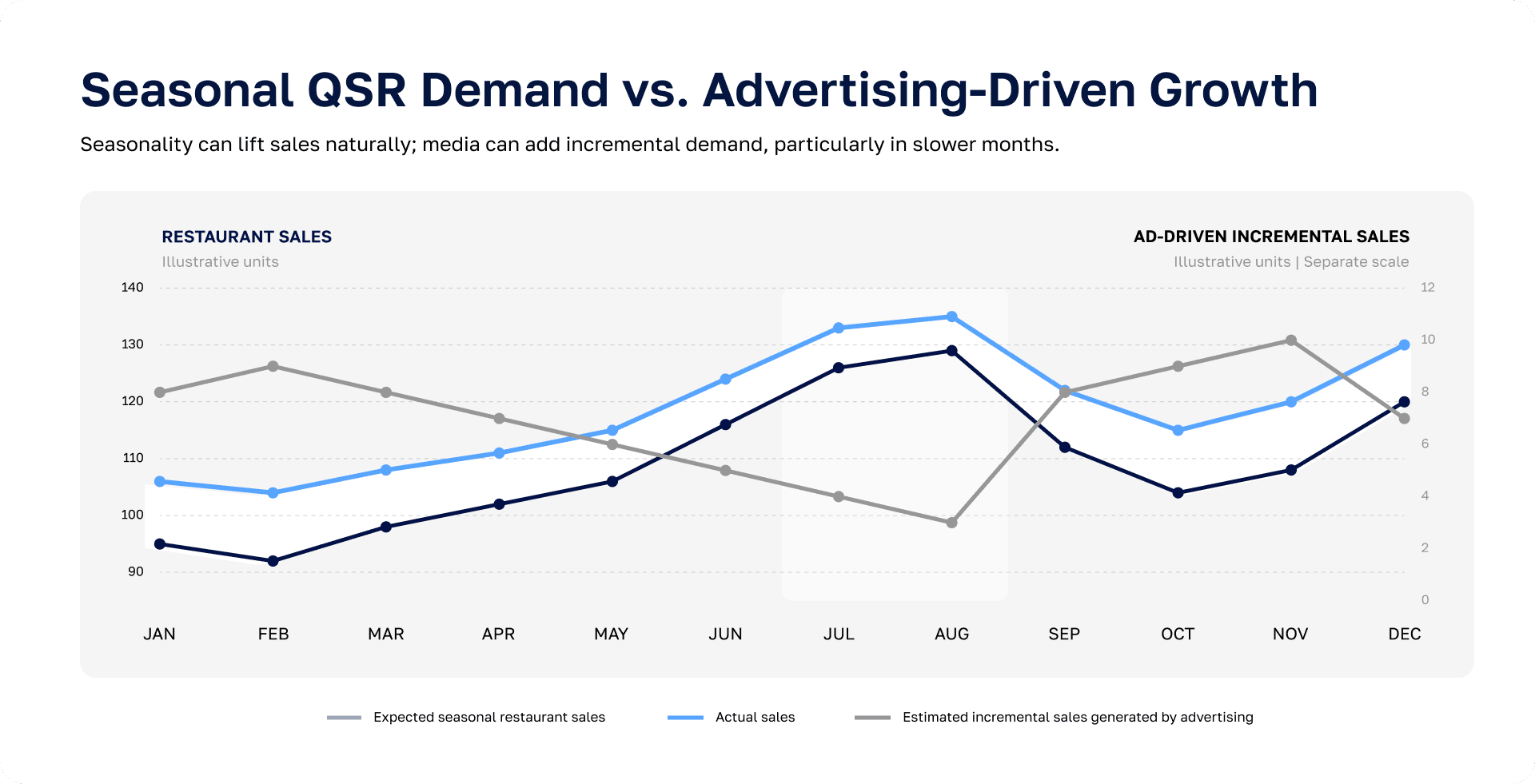
Seasonal changes can make advertising performance difficult to evaluate. A restaurant may generate more transactions during a busy summer period because more consumers are traveling through the market. If sales increase while advertising is running, that doesn't necessarily mean media caused the entire increase.
The opposite can happen during slower periods. Restaurant visits may decline even when advertising continues to generate additional demand. To understand performance, brands should evaluate advertising results with the outside factors that influence restaurant sales.
Historical sales trends, transaction volume, average order value, restaurant traffic, weather, holidays, and local events all provide context for changes in demand. Year-over-year comparisons can help identify recurring seasonal patterns, while comparisons against expected baseline demand provide a clearer picture of whether results are above or below normal levels.
Brands should also account for changes in menu pricing, promotions, restaurant operations, and competitor activity. Incrementality testing can provide insight by estimating how many visits or sales occurred because of advertising rather than normal consumer demand.
Strong sales during a peak season don't necessarily mean additional advertising investment is needed, just as slower sales during periods of lower demand don't automatically mean advertising budgets should be cut. Media decisions should be based on how much additional business advertising generates, rather than seasonal sales trends alone.
The focus should be on understanding how much additional business media creates and using that information to guide future spending decisions.
Building a More Responsive QSR Marketing Strategy
Seasonal planning works best when brands combine historical insights with the ability to respond to current conditions. A strong approach starts with understanding how demand changes across restaurant locations, meal occasions, and consumer groups. These patterns can inform annual media planning, campaign schedules, and budget allocation.
From there, brands should monitor restaurant performance and local conditions throughout the year. Unexpected weather, shifts in consumer spending, new competitors, or changes in community activity may create reasons to adjust advertising plans.
Coordination between media and restaurant operations is also important. Advertising can generate interest, but menu availability, staffing, service capacity, and ordering options determine whether restaurants can meet that demand.
When these factors are considered together, QSR brands can make better decisions about when to increase investment, where to focus campaigns, and which opportunities are worth pursuing.
USIM's Approach to Seasonal QSR Media Planning
At USIM, seasonal QSR planning starts with understanding the consumer behaviors and business conditions that influence restaurant demand. We evaluate historical performance, audience insights, geographic differences, and seasonal trends to help brands identify where advertising can have the greatest impact.
Our channel-agnostic approach allows us to recommend media based on the needs of each market and campaign, rather than relying on a predetermined channel mix. By connecting media planning with analytics and ongoing performance measurement, we help QSR brands adjust investment as demand changes and evaluate which campaigns are generating additional business.
This approach supports national brand objectives while allowing for the flexibility needed to address local market conditions.
Turning Seasonal Insights into Stronger QSR Performance
Seasonality influences nearly every aspect of QSR demand, from restaurant traffic and menu preferences to meal occasions and ordering habits. Brands that understand these patterns are better prepared to anticipate changes in consumer behavior, adapt their advertising, and invest where media can make the most difference.
By combining seasonal insights with local market data, integrated media planning, and performance measurement, QSR brands can support restaurant traffic throughout the year while building stronger long-term customer relationships.
USIM helps QSR brands turn seasonal consumer insights into smarter media strategies that respond to local demand, improve advertising performance, and support business growth. Connect with USIM today to find out how we can help you build a more effective QSR media strategy.